
Pathway to sustainability
Records that support certification such as SPRING — the Sustainable Program for Irrigation and Groundwater Use by GLOBALG.A.P. — and Goccia Verde.
Agorà · The Agritech Oracle
The best irrigation forecast, at the lowest price ever. Agorà combines semantics, physical models and AI that learns from farmers — for any crop, on any soil, worldwide.
Agorà learned
10 mm logged. Drainage on the lower side of field 4 adjusted — tomorrow’s balance starts from what you actually did.
ILLUSTRATIVE CONVERSATION
The solution
Give Agorà the position of a field. It picks the best local data and the best model for it, and runs a digital twin of the soil, the crop and the atmosphere above them.
Input
Digital twin
For each field, Agorà selects the best weather service and soil data provider available.
It selects the best model for the case, from CRITERIA1D by ARPAE Emilia-Romagna to AquaCrop by FAO.
Output
How Agorà thinks
Semantics brings every data source into one picture. Physics turns that picture into a water balance you can check. AI learns from farmers’ feedback and tunes the model to each field.
The AI never replaces the physics. It adjusts a model you can inspect, so every recommendation can still be traced back to rain, soil and crop — and it gets better every season.
Semantics
Weather, soil maps, satellite, sensors and farm software, mapped to one meaning on Milky Data Way.
Physics
A day-by-day soil water balance from a validated agro-hydrological model.
AI
Applied irrigations, field observations and corrections tune the model to how each field really behaves.
Advice
By app, SMS, WhatsApp, Telegram, WeChat, dashboard or API.
The farmer’s reply goes back to the AI
How it works
Agorà starts from one year of daily temperature and rainfall, plus the features of the soil, the crop’s water needs and irrigation method, its cycle and root development, and how water infiltrates. Then it runs every day.
Not just a number to irrigate: the terms behind it, for each of the next three days. Agronomists can check every one of them.
Model parameters
Soil comes from digital soil maps or sampling. The crop comes from a library of 40+ models. The farmer’s feedback keeps both honest.
Soil
Number of horizons and their depths, coarse fragments, organic matter, texture (sand, silt, clay) and bulk density.
Soil
Maximum infiltration and the water retention curve of each soil layer.
Crop
Sowing day, maximum cycle length, leaf-area parameters, thermal thresholds and degree-days for emergence and leaf growth.
Crop
Initial and maximum root depth, and root shape.
Crop
Crop coefficient, leaf water potential, stress tolerance and fraction of readily available water.
Irrigation
Irrigation shift and volume, degree-days to start and end irrigation, and the most sensitive growth stage.
Engagement and assessment
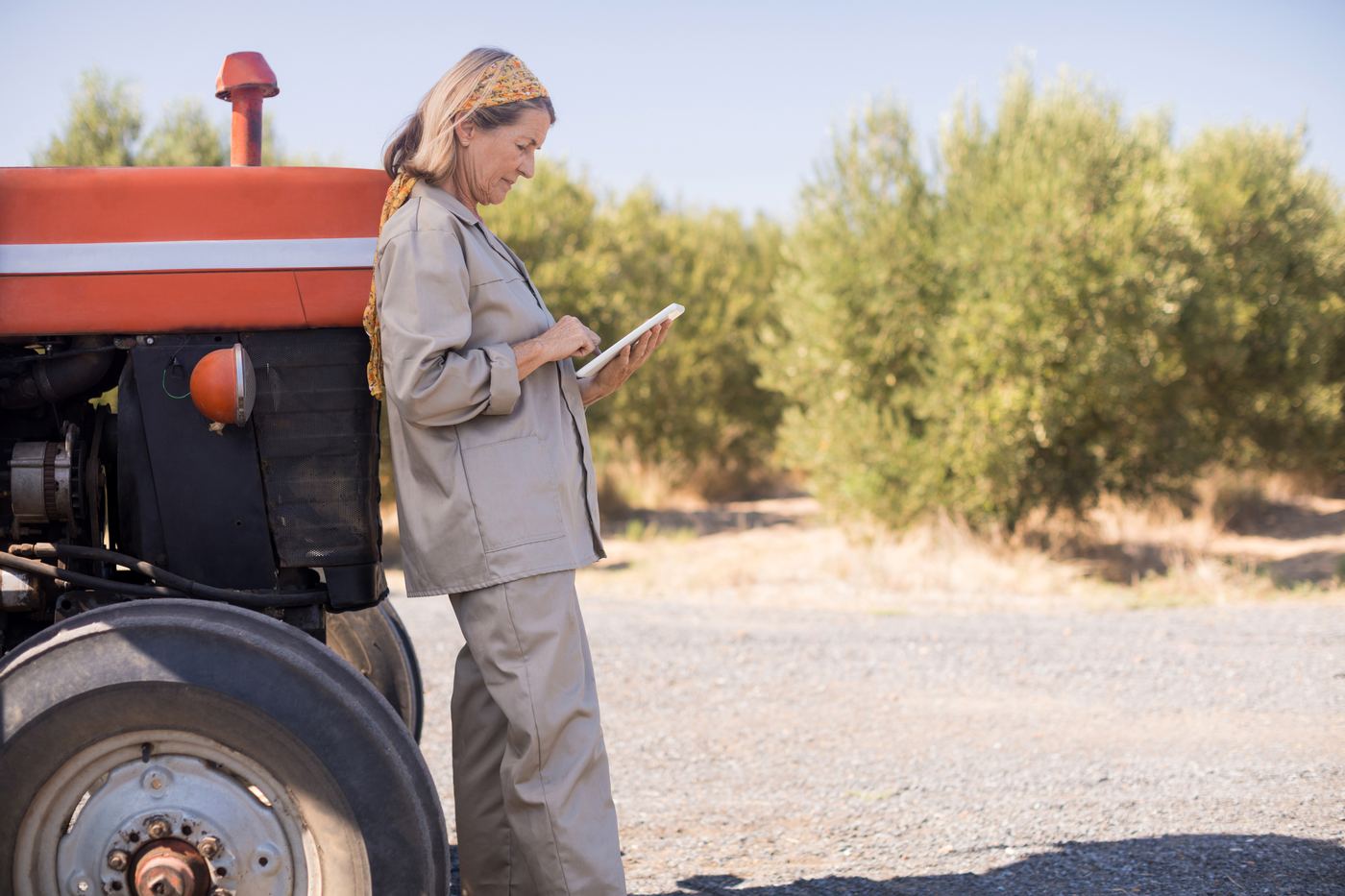
Send us your previous seasons’ irrigation data. Agorà replays them and returns a water efficiency assessment: where you were in the optimal range, where water was short, and where it was wasted.
Because the question is not only this year. What if next year you don’t have the water you had this year?
Automatic irrigation
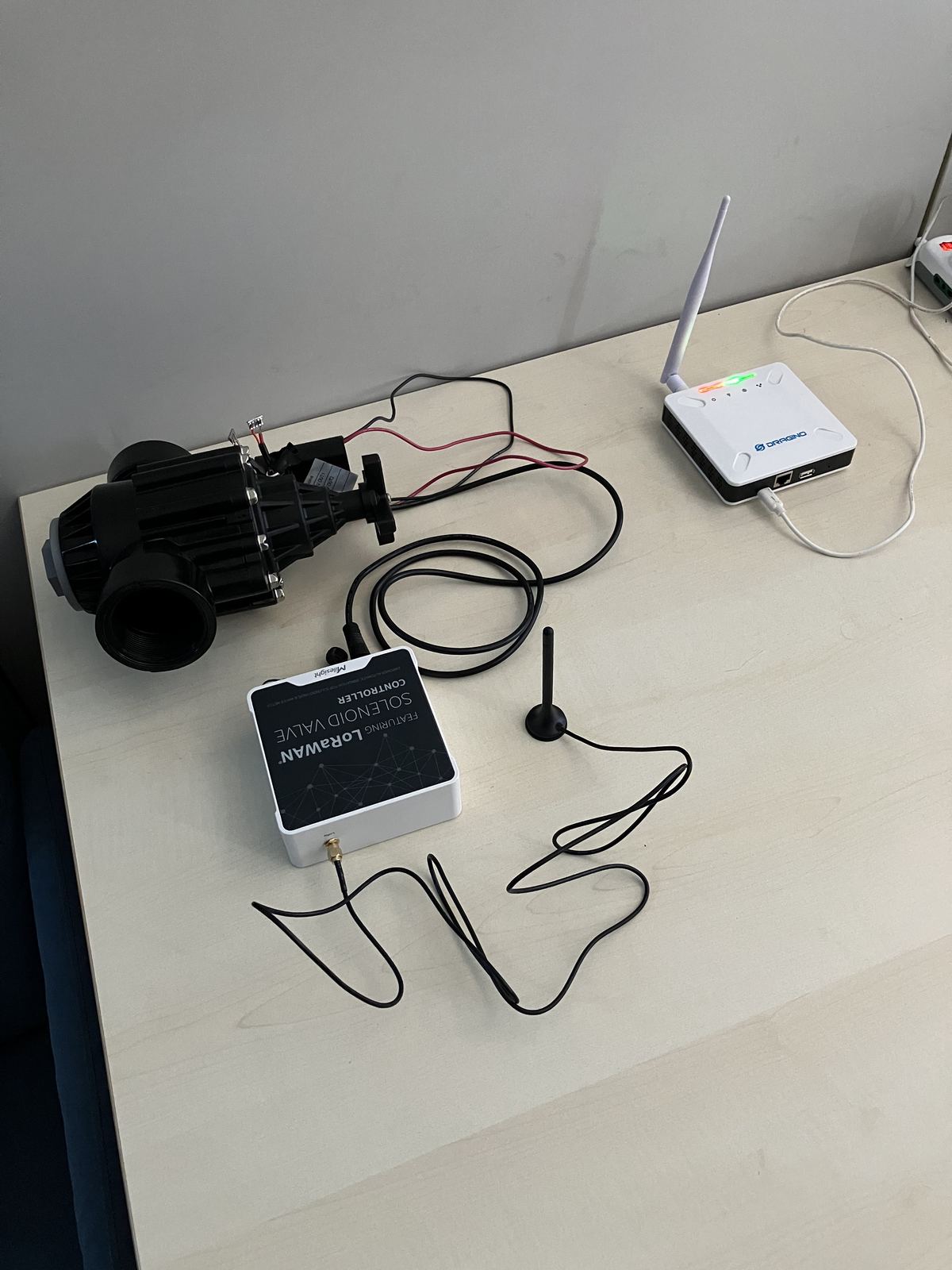
Agorà can control irrigation directly — only when a remote LoRaWAN valve is available and the farmer authorises the action.
LoRaWAN hardware is sold separately.
Unique features
Records that support certification such as SPRING — the Sustainable Program for Irrigation and Groundwater Use by GLOBALG.A.P. — and Goccia Verde.
Built on open-source, validated models such as CRITERIA1D by ARPAE Emilia-Romagna — transparent and trustworthy, not a black box.
Agorà works without in-field hardware. Where soil moisture sensors, CRNS or satellite data exist, it uses them for extra precision.
From a single plot to an entire region, Agorà adapts to your scale and delivers precise advice whatever your context.
For service providers
Through its API, Agorà slots into the digital systems agritech service providers already offer — without you building an agro-hydrological model, a data-integration layer or a learning loop.
{
  "unit": "field-4",
  "crop": "potato",
  "advice": [
    { "day": "today",     "irrigation_mm": 8 },
    { "day": "tomorrow",  "irrigation_mm": 15 },
    { "day": "day_after", "irrigation_mm": 5 }
  ],
  "calibrated_from_feedback": true
}
Questions
It learns from farmers’ feedback — the irrigations they actually applied, what they observe in the field, and the corrections they make — and uses it to tune the model to how each field really behaves, rather than a textbook average.
No. Agorà is sensor-less. If you already have soil moisture sensors, CRNS or satellite data, it will use them. For automatic irrigation you need a LoRaWAN valve, sold separately.
More than 40 crop models, from potatoes and onions to cereals and orchards. Tell us what you grow and we will confirm before you commit.
Three days — today, tomorrow and the day after — re-run every day with fresh observations and forecasts.
Through the channel that works best for you: the mobile app, SMS, WhatsApp, Telegram or WeChat. Agronomists also get a dashboard, and developers an API.
One unit is free. Two units cost €10 a month. See pricing for what a unit is and for API plans.
You do. CONFIRM DATA OWNERSHIP AND RETENTION WORDING WITH LEGAL
Yes. We co-designed and validated Agorà with Royal Agrifirm in the Netherlands over three years, on potatoes, onions and tulips. Read the potato white paper.
One unit is free, forever. Half an hour with us and you will know whether Agorà fits your fields.